

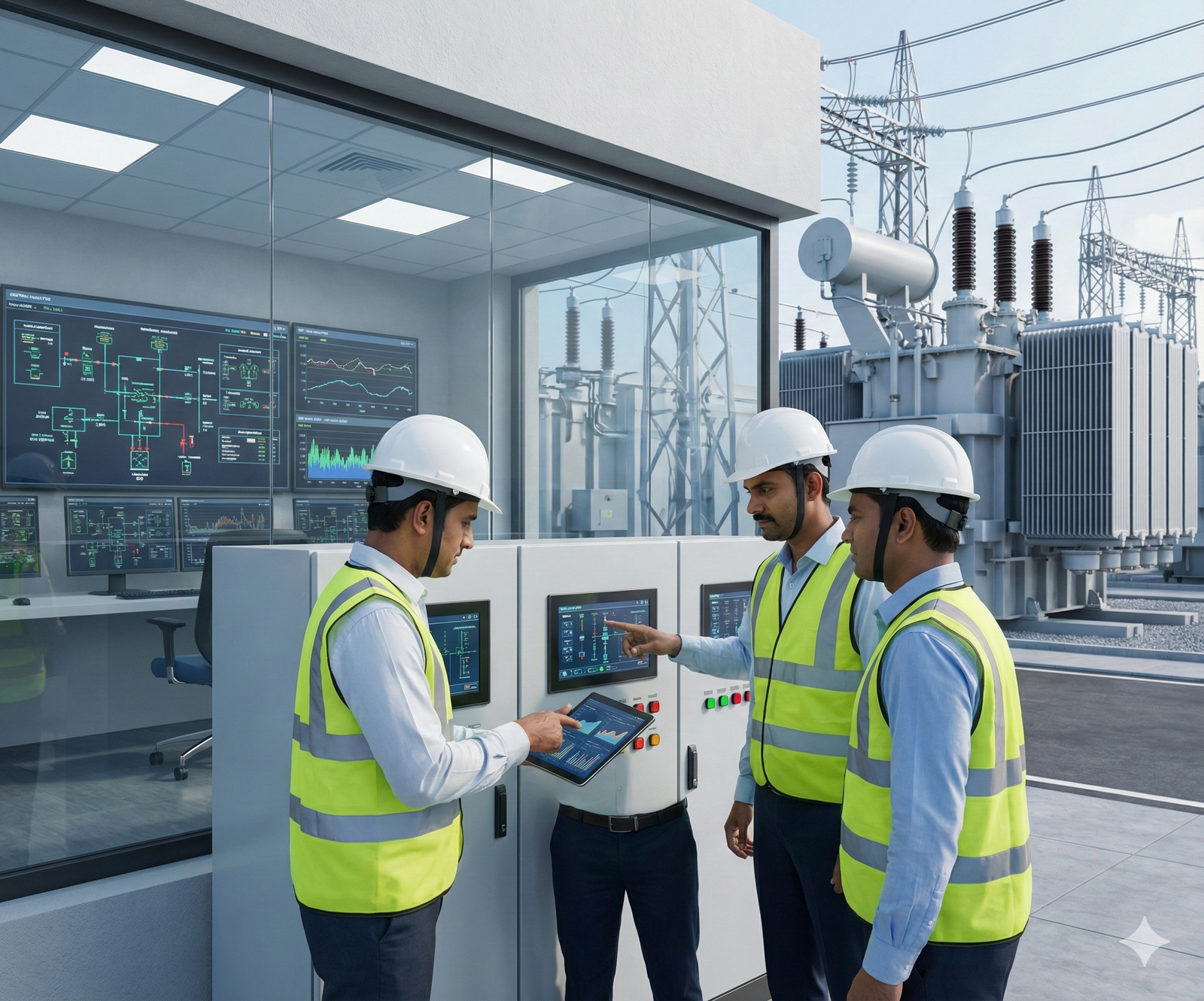
Smart Grid & Digital Substations: How Modern Power Infrastructure is Changing
Introduction
As renewable energy grows rapidly, traditional power grids face increasing pressure to maintain stability, manage variable generation, and prevent outages. This is why the energy sector is shifting toward Smart Grids and Digital Substations—modern power infrastructure designed to be more reliable, automated, data-driven, and efficient.
For industries, utilities, and infrastructure developers, understanding this shift is critical because smart grids directly impact:
- power reliability
- outage response time
- energy efficiency
- monitoring and control
- future renewable integration
This article explains what smart grids and digital substations are, how they work, and why they matter.
1) What is a Smart Grid?
A smart grid is an upgraded electricity network that uses:
- sensors
- automated controls
- real-time communication
- digital monitoring
Unlike traditional grids, which are reactive (respond after failures), smart grids are:
✅ predictive
✅ automated
✅ faster in fault response
Key Smart Grid Features
- real-time grid monitoring
- automatic fault detection
- remote switching and control
- energy flow optimization
- integration support for renewables
2) What is a Digital Substation?
A digital substation modernizes conventional substations by replacing manual and analog systems with:
- smart protection relays
- digital sensors
- IEC 61850 communication
- SCADA integration
- intelligent control panels
The goal is to create a substation that is:
✅ safer
✅ more reliable
✅ remotely manageable
✅ data-driven
3) How Digital Substations Work (Simple Explanation)
Traditional substations rely heavily on:
- copper wiring
- manual operations
- limited real-time reporting
Digital substations use:
- intelligent electronic devices (IEDs)
- fiber optic communication
- automation logic
- centralized monitoring
This allows:
- instant fault identification
- faster isolation
- quick restoration
- better equipment protection
4) Why Smart Grid & Digital Substations Are Trending Now?
1) Renewable Energy Integration
Solar and wind are variable, so grid systems must respond faster.
2) Faster Fault Isolation
Digital substations help detect faults quickly and isolate affected feeders automatically.
3) Reduced Downtime for Industries
For industrial power users, even small outages cause:
- production loss
- machine breakdown risk
- quality issues
Smart grid upgrades reduce outage duration significantly.
4) Real-Time Monitoring & Reporting
Utilities and businesses get live data on:
- voltage
- load
- power factor
- fault events
- equipment health
5) Major Benefits for Businesses & Industries
✅ Better Power Reliability
Smarter fault management reduces blackouts and tripping.
✅ Improved Power Quality
Smart systems control:
- harmonics
- reactive power
- voltage stability
✅ Predictive Maintenance
Digital sensors can detect early issues in:
- transformers
- breakers
- relays
- feeders
✅ Faster Decision-Making
Real-time dashboards enable instant response and planning.
6) Key Technologies Used in Smart Grid Systems
Smart grids rely on modern tech such as:
- advanced metering infrastructure (AMI)
- SCADA systems
- IoT sensors
- remote terminal units (RTU)
- automation and relay logic
- fiber communication networks
- AI analytics (in advanced grids)
7) Implementation Process (Step-by-Step)
For grid modernization projects, implementation usually follows:
Step 1: Assessment
- existing infrastructure condition
- fault history analysis
- load growth projection
Step 2: Design & Planning
- digital SLD updates
- protection scheme design
- communication architecture planning
Step 3: Equipment Upgrades
- digital relays
- smart meters
- sensors and IEDs
- SCADA integration
Step 4: Testing & Commissioning
- relay testing
- communication testing
- automation logic validation
Step 5: Monitoring & Maintenance
- live performance monitoring
- preventive and predictive maintenance planning
8) Cost Factors (What Impacts Budget?)
Cost depends on:
- voltage level and substation capacity
- number of bays/feeders
- required automation level
- communication architecture (fiber/RTU setup)
- SCADA and control room setup
- cybersecurity requirements
- replacement vs retrofit scope
9) Timeline (How Long it Takes)
A typical smart grid / digital substation project takes:
- assessment + design: 3–6 weeks
- procurement: 6–16 weeks
- installation: 4–10 weeks
- testing and commissioning: 3–6 weeks
Total: 3 to 6 months depending on complexity.
FAQs
Q1. Is a smart grid only for utilities?
No. Many large industrial campuses and SEZs also implement smart-grid solutions internally.
Q2. Why is IEC 61850 important?
It enables standardized communication between devices, improving automation and reducing wiring.
Q3. What is the biggest advantage of digital substations?
Faster fault detection, automation, and much better monitoring & safety.
Q4. Do digital substations reduce maintenance cost?
Yes, because predictive monitoring reduces breakdown frequency and prevents major failures.
Conclusion
Smart grids and digital substations are shaping the future of power infrastructure. They make electricity networks intelligent, responsive, safe, and future-ready, enabling seamless renewable integration and improved reliability—especially for industrial consumers.
Businesses that depend on stable power supply should pay close attention to this transition, as modern grid upgrades directly impact productivity, downtime, and long-term energy planning.