

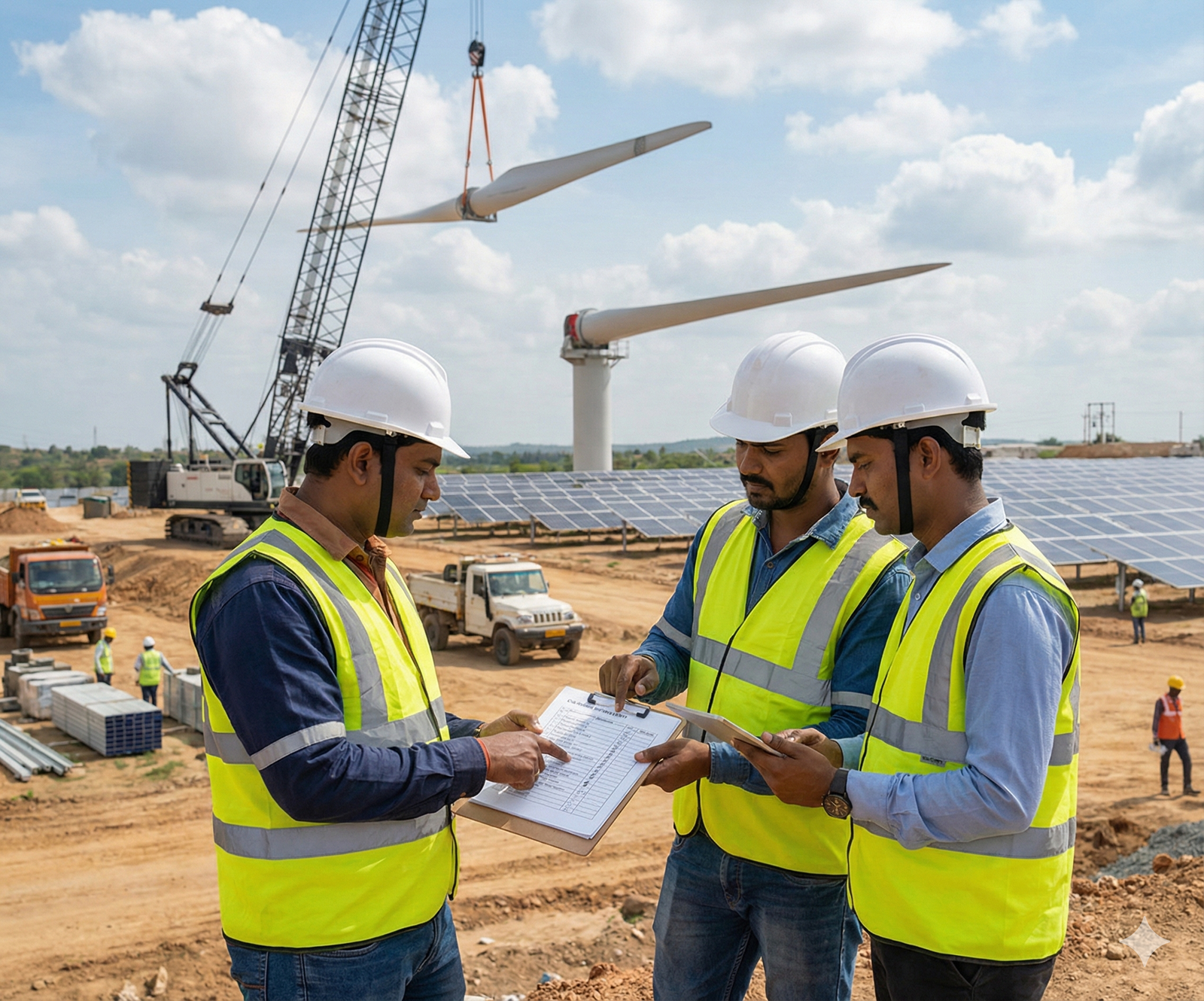
Project Execution (EPC): Complete Guide to Renewable Energy EPC from Planning to Handover (With Checklist, Safety, Timeline & Cost Factors)
Introduction
EPC stands for Engineering, Procurement, and Construction—the most important phase in any renewable energy or power infrastructure project. Even the best design and equipment will fail to deliver results if execution is not managed professionally.
For Solar, Wind, and Electricity Grid projects, EPC is the process that converts drawings into reality through:
- disciplined planning
- skilled manpower
- strong project monitoring
- quality assurance
- strict safety compliance
- smooth commissioning
This article explains how EPC works, what the process includes, key risks, best practices, and how to deliver projects reliably.
1) What Is EPC and Why It Matters?
EPC is a turnkey execution model where one agency takes responsibility for:
- design engineering
- material procurement
- on-site construction
- testing & commissioning
- documentation & handover
1.1 Why EPC Determines Project Success
In renewable projects, most failures happen due to:
- poor workmanship
- wrong material handling
- weak installation standards
- poor project coordination
- incomplete testing and documentation
A strong EPC process ensures:
✅ performance
✅ safety
✅ compliance
✅ predictable timelines
✅ lower maintenance issues
2) The 3 Pillars of EPC
2.1 Engineering (E)
Engineering ensures the project is buildable and optimized.
Includes:
- layout planning
- civil + structural drawings
- electrical SLD & cabling plan
- protection and earthing design
- SCADA planning
- BOQ preparation
2.2 Procurement (P)
Procurement ensures correct materials at correct time.
Includes:
- module/turbine/inverter sourcing
- vendor approvals
- logistics planning
- inspection at dispatch
- inventory and storage planning
2.3 Construction (C)
Construction is physical execution.
Includes:
- civil works
- erection & installation
- cabling & terminations
- substation & evacuation work
- pre-commissioning tests
3) EPC Workflow: Step-by-Step Process
Step 1 — Scope Finalization & Project Kickoff
This stage defines:
- project boundaries
- responsibilities (client vs EPC)
- milestones and timelines
- reporting method
- safety standards
Outputs:
- project execution plan (PEP)
- baseline schedule
- RACI matrix
- risk register
Step 2 — Detailed Engineering & Design Freeze
Engineering must be “construction-ready” before site execution.
2.1 Key Engineering Deliverables
- GFC drawings (Good for Construction)
- approved BOQ
- QC inspection templates
- method statements
- test plans
2.2 Design Freeze Importance
Without freeze:
- rework increases
- cost rises
- timelines slip
Step 3 — Procurement Planning & Material Control
Procurement is one of the biggest success factors.
3.1 Procurement Strategy
Should cover:
- approved vendors list
- technical specification compliance
- lead-time mapping
- buffer stock planning
3.2 Material Handling & Storage
Critical for:
- modules (fragile)
- cables (damage risk)
- switchgear (humidity risk)
Step 4 — Site Mobilization
Before construction begins:
- site office setup
- labour accommodation
- tool inventory
- safety signage
- PPE distribution
- site entry protocols
Step 5 — Execution & Construction Control
This is the main EPC phase.
5.1 Civil Works
Includes:
- site grading
- road construction
- foundations
- trenches and ducting
- control room buildings
5.2 Mechanical Works
Includes:
- mounting structures / tower erection
- equipment installation
- alignment and torque checks
5.3 Electrical Works
Includes:
- DC/AC cabling
- HT cable works
- termination and jointing
- earthing and lightning protection
- relay panels and SCADA connection
Step 6 — Quality Assurance & Quality Control (QA/QC)
QA/QC is what separates normal EPC from premium EPC.
6.1 Quality Control Tools
- ITP (Inspection & Test Plan)
- WIR (Work Inspection Request)
- MIR (Material Inspection Report)
- checklists per activity
- daily QC logs
6.2 Critical Quality Points
- foundation alignment
- torque tightening
- cable termination quality
- earthing values
- relay settings
Step 7 — Testing & Pre-Commissioning
Common tests:
- insulation resistance (IR)
- continuity
- polarity
- relay testing
- breaker timing test
- transformer tests
Step 8 — Commissioning & Handover
Commissioning includes:
- energization
- performance validation
- PR baseline creation (solar)
- turbine functional tests (wind)
Handover includes:
- documentation pack
- as-built drawings
- client training
- final completion certificate
✅ EPC Execution Checklists
A) Pre-Execution Checklist
- scope and contract freeze
- drawings approved (GFC)
- BOQ approved
- safety plan prepared
- vendor list finalized
B) Procurement Checklist
- technical compliance verified
- dispatch inspection done
- transport plan ready
- storage yard ready
- serial tracking system active
C) Site Execution Checklist
- labour strength planned
- tools and cranes available
- method statement approved
- daily reports in place
- QC checkpoints planned
D) Testing & Handover Checklist
- all tests completed
- punch points closed
- SCADA dashboards verified
- as-built drawings ready
- client handover training done
✅ Safety Points in EPC Execution
EPC execution is high-risk because it involves:
- electrical works (HT/LT)
- working at height
- trenching hazards
- crane and lifting operations
Mandatory Safety Practices
✅ Safety induction compulsory
✅ PPE enforcement (helmet, gloves, shoes)
✅ permit-to-work system
✅ LOTO for all electrical works
✅ trench barricading & signage
✅ crane lifting plan approval
✅ toolbox talk daily
✅ emergency response plan on-site
✅ Timeline: How EPC Projects Are Planned
The EPC schedule depends on project type.
Typical EPC Timeline (Indicative)
- Engineering Freeze: 2–6 weeks
- Procurement: 6–16 weeks
- Civil & Infra: 4–12 weeks
- Installation Works: 4–12 weeks
- Testing & Commissioning: 2–6 weeks
Total average: 3 to 8 months, varies by scope and grid approvals.
✅ Cost Factors in EPC Execution
EPC cost is influenced by:
- project scale and complexity
- terrain and access difficulty
- quality standard level (basic vs premium)
- evacuation line + substation scope
- labour availability and location
- material price volatility (steel/copper)
- execution speed requirement (fast-track)
- compliance documentation and testing scope
✅ FAQs (Project Execution EPC)
Q1. What does EPC include?
Engineering, procurement, construction, testing, commissioning and handover.
Q2. What causes EPC delays most?
Design changes, procurement delays, and grid approval issues.
Q3. How to ensure EPC quality?
ITP, QC checkpoints, skilled manpower, and documentation discipline.
Q4. What is the biggest risk in EPC?
Safety incidents and faulty installation—both cause long delays and losses.
Q5. Why is documentation critical in EPC?
Because it proves quality, ensures compliance, and supports warranties and audits.
Conclusion
EPC execution is the “heart” of renewable and power infrastructure projects. A disciplined EPC approach ensures on-time delivery, long-term performance, and safety compliance.
For long-lasting performance, EPC must be treated as an engineering process—not just construction work.