

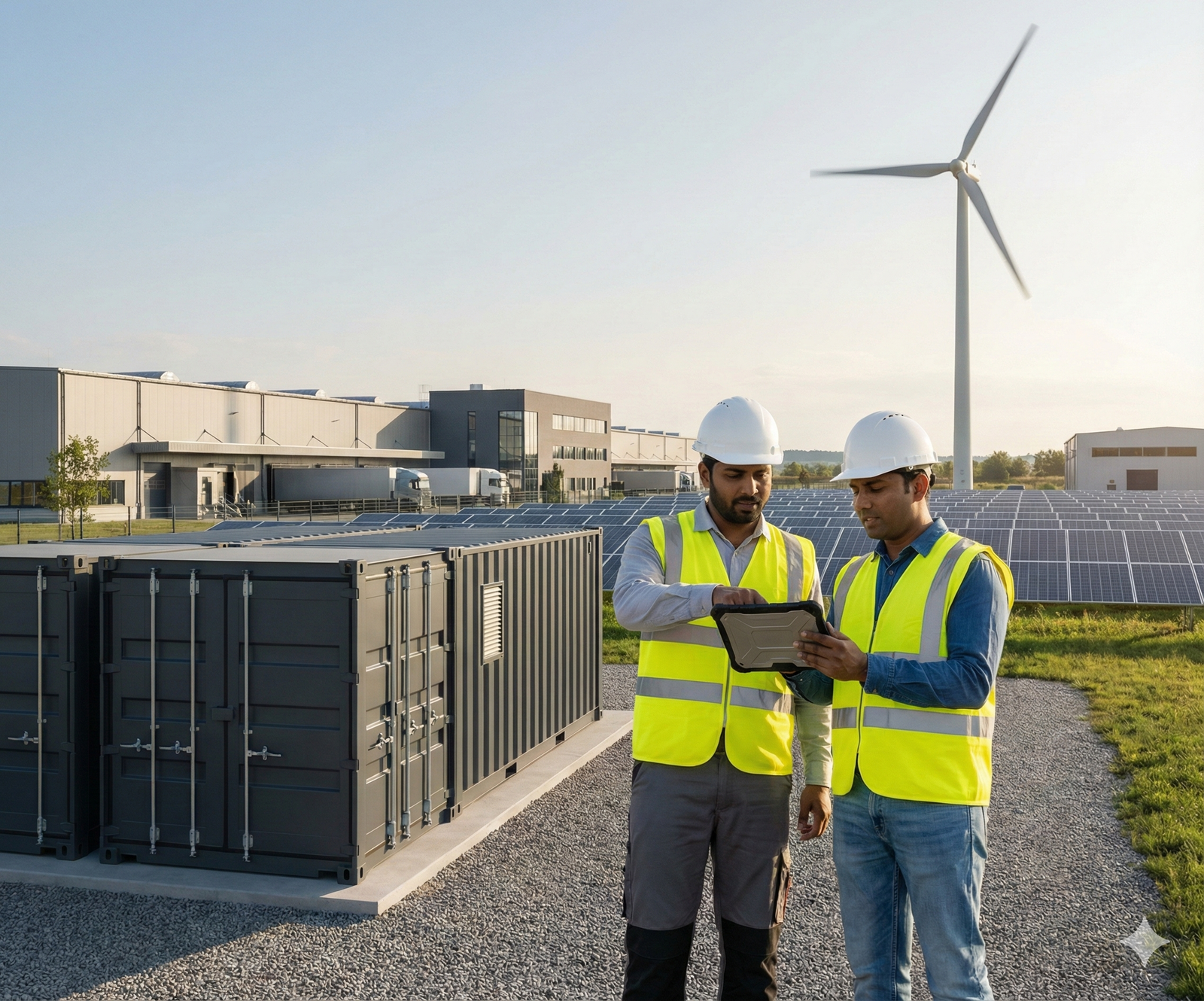
Hybrid Renewable Projects (Solar + Wind + Storage): Complete Guide for Businesses
Introduction
Renewable energy adoption is growing rapidly, but many industrial and commercial businesses face one common challenge: intermittency. Solar produces only in the daytime, wind depends on wind availability, and grid tariffs fluctuate with peak demand.
This is where Hybrid Renewable Projects (Solar + Wind + Storage) are becoming the most preferred clean-energy solution for businesses aiming for:
-
stable power availability
-
better energy cost control
-
improved sustainability performance (ESG)
-
reduced reliance on grid during peak hours
This guide explains what hybrid projects are, how they work, benefits, implementation process, and key cost factors.
1) What is a Hybrid Renewable Project?
A hybrid renewable project is an energy setup where two or more renewable sources are combined—most commonly:
✅ Solar + Wind + Battery Energy Storage System (BESS)
This integration ensures:
-
better energy availability throughout the day
-
improved reliability compared to a single-source renewable project
-
reduction in energy waste (curtailment)
-
support for critical industrial operations
2) Why Hybrid is Trending for Businesses?
Businesses don’t only need cheaper power—they need predictable and continuous power.
Key market reasons:
-
Industries operating 18–24 hours need renewable support beyond daytime
-
Electricity peak tariffs are increasing
-
Grid instability / outages create losses
-
ESG and sustainability targets are becoming mandatory
Hybrid systems solve these challenges by combining generation + storage.
3) How Solar + Wind + Storage Works (Simple Explanation)
✅ Daytime
-
Solar generates power
-
Plant consumption is met first
-
Extra solar power charges the battery
✅ Evening / Night
-
Wind may generate depending on site conditions
-
Battery discharges to support load
-
Grid import reduces during peak tariff hours
✅ Backup / Critical Load Support
Battery can support:
-
critical machinery
-
IT systems
-
lighting & essential power
4) Key Benefits of Hybrid Renewable Projects
1) Higher Energy Reliability
Solar alone stops at night. Wind improves availability. Storage makes it usable when needed.
2) Lower Electricity Cost
Hybrid reduces:
-
peak power purchase
-
demand charges (in many cases)
-
dependence on expensive grid import
3) Better Renewable Utilization
Storage prevents wastage by storing extra renewable power.
4) Grid Stability
Hybrid output is smoother. Batteries reduce sudden fluctuations.
5) Stronger ESG Impact
Businesses can increase renewable energy percentage and report higher sustainability achievements.
5) Who Should Consider Hybrid Projects?
✅ Best for:
-
manufacturing units running 2 shifts or 24×7
-
cold storage facilities
-
large warehouses and logistics parks
-
IT parks and commercial complexes
-
industries with high peak-hour costs
-
businesses planning net-zero goals
6) Hybrid Project Types for Businesses
A) Onsite Hybrid (Behind-the-Meter)
-
rooftop solar + small wind (rare) + battery
-
best for campuses/industrial units
B) Offsite Hybrid (Open Access)
-
power sourced from hybrid renewable plants
-
suitable for high-consumption industries
C) Captive / Group Captive Hybrid
-
company owns part of generation capacity
-
long-term cost control + renewable credits
7) Step-by-Step Process to Implement Hybrid Projects
Step 1: Energy Requirement Analysis
-
load profile analysis
-
peak demand evaluation
-
backup needs
-
monthly kWh usage pattern
Step 2: Hybrid Feasibility Study
-
solar potential
-
wind availability (if used)
-
battery sizing feasibility
-
financial viability
Step 3: System Design & Engineering
-
capacity selection (kW/MW)
-
inverter configuration
-
battery type and sizing
-
safety & compliance design
Step 4: Procurement & Installation
-
module, inverter, battery procurement
-
installation + cabling
-
EMS (energy management system) setup
Step 5: Testing & Commissioning
-
protection checks
-
charge/discharge tests
-
monitoring validation
-
performance reporting setup
8) Battery Storage: What Businesses Must Know
Battery is the most important layer in hybrid.
Battery helps in:
-
peak shaving
-
time shifting (use solar at night)
-
backup power
-
improving renewable self-consumption
Battery sizing depends on:
-
critical load
-
peak power usage window
-
desired backup duration
-
grid tariff structure
9) Key Cost Factors (What Impacts Budget?)
Hybrid project cost depends on:
-
Battery capacity (kWh) — biggest cost component
-
Battery power rating (kW)
-
System complexity (EMS sophistication)
-
Backup requirement duration
-
Grid tariff structure (peak/off-peak savings potential)
-
Onsite vs Open Access execution model
-
Compliance & safety standards (mandatory for BESS systems)
Conclusion
Hybrid renewable projects are the future for industries aiming for stable clean power instead of just “cheap renewable power.”
A Solar + Wind + Storage model delivers:
✅ better power availability
✅ strong savings over time
✅ reduced peak tariff dependency
✅ improved reliability and ESG performance
For businesses running longer hours or facing high peak tariffs, hybrid becomes the most strategic renewable investment.